
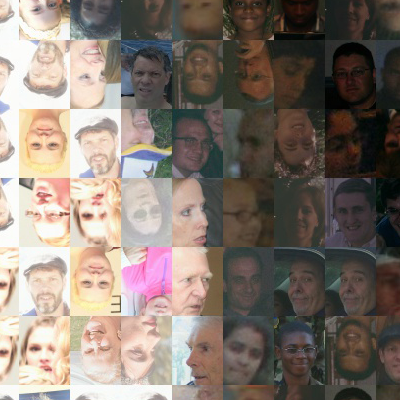
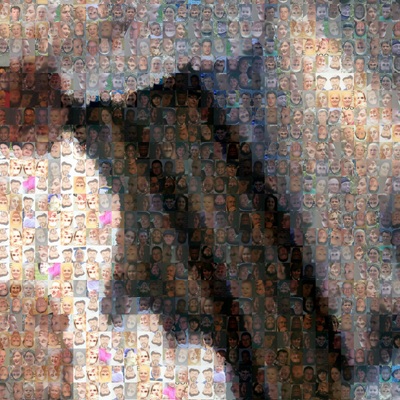
Did you ever see one of those photo-mosaic images, where there’s a large picture composed of hundreds or thousands of tiny pictures? From a distance, it just looks like a painting or a photo itself. But as you approach, you see all the individual component images.
The only way to actually appreciate the real picture is to step back, way back, until the detailed pictures are just blurry dots. If we don’t, we never see the context. It’s not that the details don’t matter – they do – but they’re not the actual picture. They’re just components of the picture.
There’s a saying about this: “missing the forest for the trees.”
It’s easy to get caught up in the details. To see the trees, so to speak; to focus closely on them, looking at the bark, the leaves, the roots, the birds or bugs living on the trees. But let’s be honest: when you’re up super-close to the thing, the details are all you see. They appear to be what really matters.
Sometimes, however, it’s valuable to get far enough away from a topic that you can actually see the forest. To see the overall structure. To see what truly matters in a much larger context.
In the photo-mosaic metaphor, it’s to see the big picture, not the tiny photos that compose it.
But what if the first time you encountered the mosaic, you were really super-close, and all you saw was the details? I just wish I’d learned this earlier, about my theology. I think that’s how most of us first encounter the Bible and God: up close, with the details being carefully explained to us.
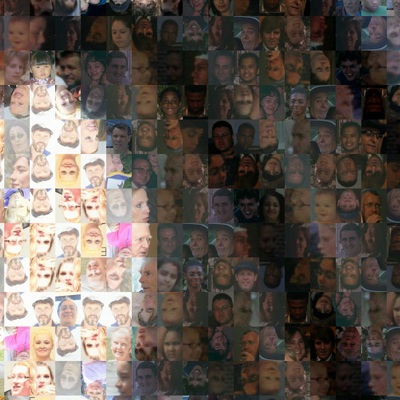
For literally decades, this analytical, rational, scientific-minded engineer studied the Bible like I studied an engineering drawing: looking intently at the details. Getting my face up as close as I could to the image, even getting out some kind of textual magnifying glass, looking at each and every story to mine out as much doctrine as possible. How that individual picture related to the ones around it, or to the overall picture, didn’t matter all that much to me.
So I could give you all kinds of details about any given “picture” in the Bible – any story, any parable, any law. I knew what it said, where it fit into the structure of the Bible, what exact doctrine was at play. Those stories, or more precisely the details for those stories, became proof-texts for my doctrines.
What I missed was what I could have seen if I’d simply stepped back, far away from the stories, far away from the details, and looked at the whole thing. At that distance, the individual story details actually start to blur. What was a tiny face or a little landscape becomes just a dot in the larger whole. Suddenly, a much more beautiful image becomes apparent that was invisible at close range.
In my case, this stepping back wasn’t my choice. Honestly, I didn’t even know it was an option. But when the events of 2020 triggered my deconstruction, and I started rethinking the entirety of my theology, down to the smallest details, one side effect – a very important side effect – was that I stopped trusting the granular details of the Bible to necessarily be perfectly individually true. And initially, for engineer me, it was horribly disconcerting and painful.
I recently heard a great example of this, in Pastor Brian Zahnd’s sermon titled “Dazzle Gradually.” He was commenting on 1 Samuel 15, where Samuel tells Saul to destroy the Amalekites. Pastor Zahnd points out that the text doesn’t quite say what people assume: as he puts it, the Bible doesn’t record God saying to kill the babies, it records that “Samuel said that God said” to do so. On that reading, what the passage delivers is “not a revelation of God, but a revelation of Samuel” – a prophet who, in Zahnd’s words, “clearly also hated Amalekites.” But I was taught that the command to kill the babies was God’s specific command, and thus a comment on the nature of God that seemed to disagree with other revelations in the Bible about the nature of God. And that disagreement ate at my peace about the Bible. And as a rigorous careful reader, I noticed dozens of things that seemed to disagree, and of course, I simply HAD to explain every single one of them away. I spent countless hours wrestling with this kind of nitty-gritty detail, trying to shoehorn it into my doctrine.
Now, I thought I was already faithfully seeing the Big Picture. I had heard the term “systematic theology,” the idea that everything the Bible teaches can be organized into a single coherent whole. To my engineering brain, it was perfect: I had another level of rigorous and precise structure to which I could attend. On the surface, that sounds an awful lot like backing up and looking at the whole picture. And done well, it can be – the best systematic theologians hold enormous room for mystery, paradox, and questions they leave open, even as they work diligently to create a consistent, trustworthy, True structure out of every part of the scriptures. But that’s not what I was doing.
What I was practicing, instead, was something narrower and harder: a conviction that every detail had to lock into its exact place, that any apparent contradiction had to be explained away, that the whole system stood or fell on getting each tile perfectly fixed. Call it the fundamentalist impulse wearing the robes of the systematic. It’s determined to crystallize the entirety of the Bible into one airtight structure. Every detail needs its specific slot. We can, as the idea goes, figure out exactly what theology is True. We have to determine exactly what each picture means, so we can glue it into place permanently, precisely, and if necessary, explain away any other possible interpretation. Eliminate all messiness. Eliminate, in the metaphor of blurring, all fuzziness. End up with an absolutely precise image, so that each and every tile of each and every component picture is perfectly fixed where it belongs for eternity.
But I’m learning that this precision doesn’t lead to beauty. It doesn’t lead to seeing the big picture. We remain forever locked into inspecting each and every picture, because inevitably those pictures don’t actually cohere all that well. There will always, always, always be some details that just. don’t. fit. But we’re bound by systematic theology to make them fit at all costs. So we obsess endlessly over those details, and we can’t ever just step back and let them be fuzzy.
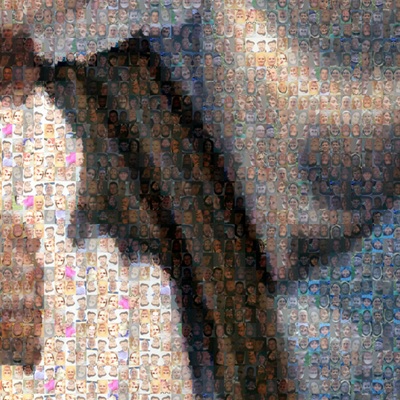
It wasn’t until I gave up my dogma of Biblical inerrancy, and started looking at the broad sweep of the Bible, that the beautiful picture that it is starts becoming more clear. Ironically, losing my sense of the perfection of the Bible – seeing the details as fuzzy, not precise – gained me a much richer and deeper love for the beauty and value of the Bible.
The church father Augustine famously – and controversially – observed that a literal reading is a “carnal” reading. And Paul himself notes that the letter kills but the Spirit gives life. As Pastor Zahnd observes, reading the Bible “in an inspired way” means recognizing that the Bible is complex and messy and has a lot to teach us if we can stop treating every verse as, in his phrase, “a timeless truth flung down from on high.”
And one neat thing about a mosaic is that you really can lose quite a few tiles without altering the picture in any meaningful way. And that’s really good news for lovers of the Bible. Because if you spend any time at all studying Biblical scholarship and the origins of the Bible and the history of translation and the source documents, you’ll quickly learn that it’s just really messy. There’s a lot we don’t know, and there are plenty of problems with the huge variety of texts and fragments. We will never, ever know exactly what the original writers actually wrote for many, if not most, passages. And even where we do know exactly what they wrote, we will never know exactly what they meant; too many things change culturally in a couple thousand years to really comprehend their thinking, and the problems only increase with the passage of time.
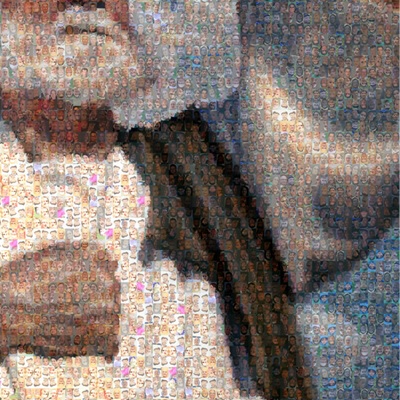
So learning to love the blurry view we see when we finally back away from a mosaic means that I can once again love the Bible. Not because I believe it’s a perfect book, but because, in spite of the fact that it’s very clearly NOT a perfect book, it’s beautiful. It portrays a God which is much bigger, much more complex, but much more loving and more determined to be reconciled to every aspect of God’s creation, than I ever thought before.
And so, as I back away from details, the specific truths in each story become less important. Is that individual tiny mosaic picture exactly perfectly factual? Not really as much of a concern as whether the overall picture is true. The typical religious focus on the literal truth of each and every detail of the Bible loses relative importance.
No, what you’ll find is that the nature and character of the God revealed by the messy writing and the confounding complexity becomes clearer and clearer. What I’m expected to do and to be is revealed more clearly, as the details of this thing we call the Bible become less clear. Ironically, the One I love becomes more visible as the details fade.
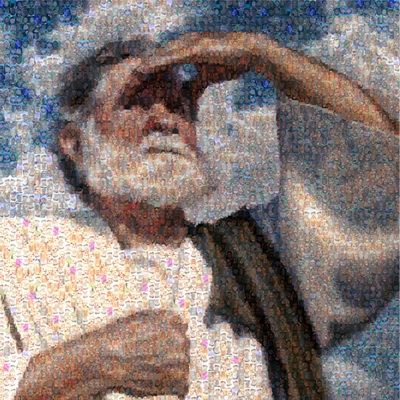
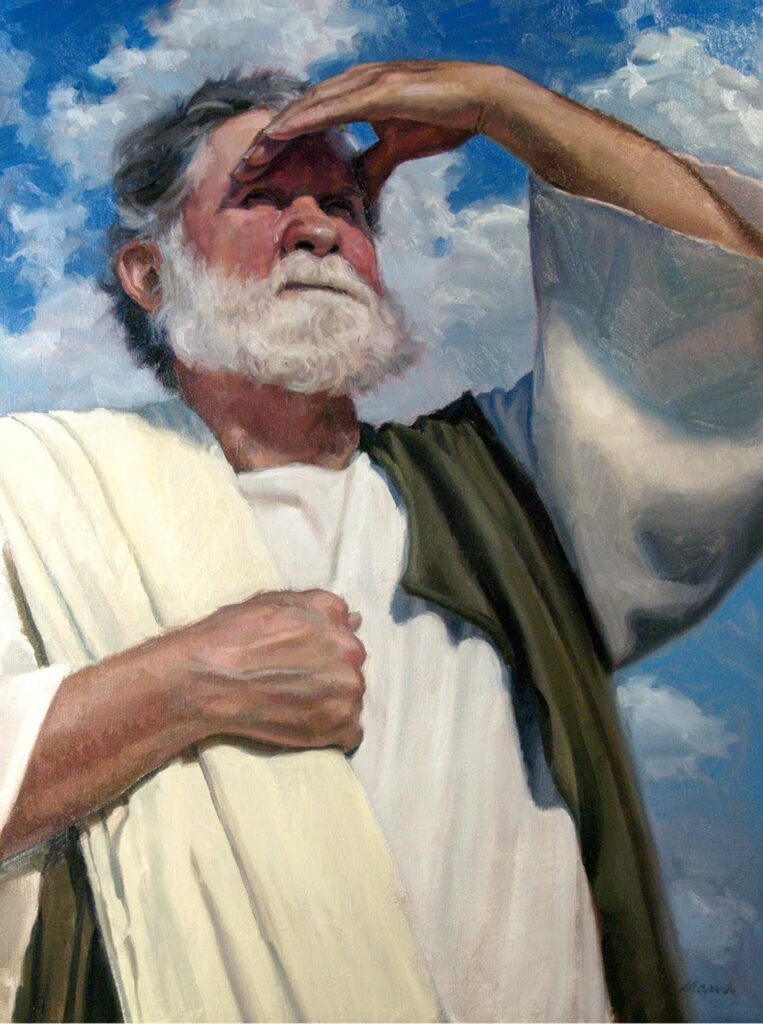
So step back, every now and then, from the Bible’s details. Let it blur. See the face of God, finally clearly revealed.
(Image from a painting by Mitch Mann, “The Prodigal Father”, showing the Father waiting, with a tear in his eye, longing for the return of his wayward son. I think this painting perfectly captures the heart and nature and character of God that we see when we truly step back, far back, from the details of the Bible, and realize that they all work perfectly together to present this image. https://www.instagram.com/mitch_mann_art/ Please go check it out on his page, and see some more of his amazing art.)
 and
and  or join our email notification list.
Hello Brandon,
Wonderful commentary in helping us better understand and know our heavenly Father. I discovered your YouTube channel about six months ago. My political deconstruction began after the Bush administration lied the US into war. I studied lots of history and recognized a government waging psywar against it’s own people. Governments lie. This is nothing new, but humans probably never witnessed such mass manipulation in real time with 24 hour news and talk radio. All news outlets with a few exceptions became flag-waving cheerleaders. The nascent internet provided a place for dissent or public discourse. Now, it too has become a weapon for mass misinformation (yet a repository of knowledge exponentially greater than a thousand Libraries of Alexandria). I voted Democrat next election but eventually gave up on politics. Humans tend to lord over each, as Jesus said, rather than serve each other. We need not wonder how Mango Musollini became president of the most powerful empire we have witnessed heretofore.
I no longer vote. Our elected leaders ostensibly act in the name of the American people or at least those who voted for them. I feel that I’m party to the wars in Iraq and Afghanistan because of how I voted. Now I only desire to do as we read in Micah 6:8 while I wait for all peoples to beat their swords into plowshares and no longer learn to make war. I yearn for a time death is no more and God wipes every tear from our eyes. When? How? I don’t know. But it’s a hope in God’s kingdom not any human government. .
My walk or struggle with God and the deconstruction of my beliefs has gone on much longer than with politics. A few years ago I learned about God’s true nature and introduced to his plan for universal reconciliation and salvation. I realized I’ld been struggling with RELIGION and a god anthropomorphized, even by the many of the authors of what we call holy scripture, the word of God. Today I’m constructing my faith in God the Father as revealed to us by his anointed son, the Word. He taught and demonstrated how to live as truly human, created so as to bear God’s image. My understanding of Jesus’s teachings is that God is a loving parent, not a transactional Santa Clause who knows if you been good or bad. Yes, we reap the fruit we sow, good or bad, but that is our doing. God on the other hand will restore ALL even as if through fire, to paraphrase Paul. Anyway, thank you for your YouTube channel and website. I encourage you and pray you will continue to humbly spread the good news and teach. May God bless your efforts and thank you again.
Best regards,
Mario
Thanks for the feedback, and while you’ve been at this deconstruction longer than me, I recognize a lot of my own pathway in yours. My blog is a story of my process, and I hope it brings some light to people wondering if there’s a place for them in a world that has gone mad.