
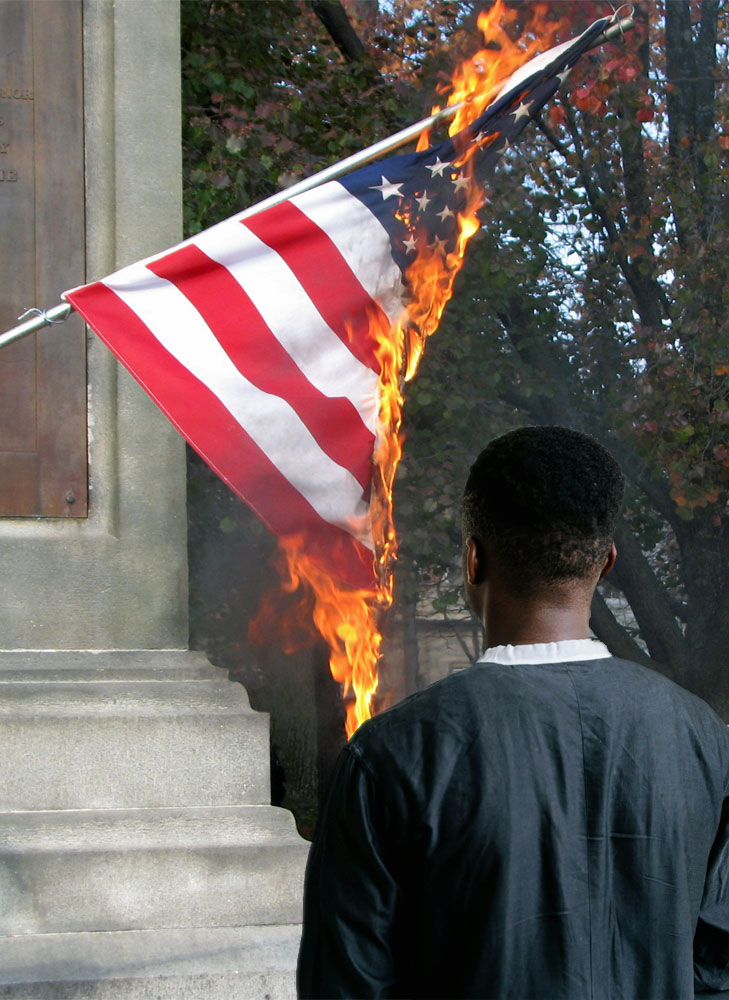
What do we do when our government becomes untrustworthy? I’ve been wrestling with this question for a while now. And everything I see coming convinces me that we’re in for a REALLY rough ride in the near future. So what do we do about it? I have some ideas that won’t fix any of our nation’s problems – but they will give us a roadmap for bringing the love of God to those around us, even as the darkness grows.
I grew up in a very conservative family, and for pretty much my entire adult life, until 2021 at least, I completely believed that our government was inherently trustworthy, and in particular, that the Republicans were far more trustworthy than their Democrat colleagues.
Perhaps I had the fortune of being raised in the heyday of American greatness. The government could really do no great wrong in my eyes. We might suffer temporary setbacks, but at a fundamental level I trusted that we would quickly course correct. Even in matters that felt deeply wrong, like I felt about Obamacare (like when Nancy Pelosi said “you have to pass the bill to find out what’s in it”), the issues were usually limited to how we spent our money, not really our inherent goodness as a nation. And the moral issues – abortion in particular – still didn’t make me fundamentally mistrust our entire system, even when I believed that some of the laws were wrong.
But I’ve got to say, 2025 and even more so 2026 has completely shattered my faith in America. Officials at all levels of our government are lying to the press and their followers on an almost daily basis. And this is happening even when the truth can be clearly demonstrated from a huge variety of sources. And more than that, they stick to the lies when challenged.
My sense is that this is happening because they are more interested in maintaining their base of support with their own followers than anything else. It doesn’t matter to them if the rest of the country and even the rest of the world can clearly see right through those lies, because the only thing that matters to them is holding onto the people that elected them.
And those people to whom they’re pandering don’t seem to be concerned for truth either. I’ve had enough interactions with people online and even with my own family where demonstrating the falsehood of something that they believe doesn’t change their mind; they simply reply with some statement like “Well, the principle is correct even if that instance is wrong.”
So it seems that a large chunk of the American population doesn’t really care about government honesty. They may SAY that they do, but functionally they don’t.
I get it at some level, because I used to avoid digging too deeply into matters where I was challenged about my preferred party. I really didn’t want to learn anything that would disturb my happy trust in my party. It was far easier to simply trust them, and trust in their self-promoting exhortations of trustworthiness, and to trust in their disparaging statements about the other party.
I should pause here and observe that in the last few years, one important thing I have learned is that all this trust in my government, and my sense of the inherent goodness of America, are not shared by a pretty substantial number of people in America – and those are mostly the ones on the margins of American power. Black people, indigenous people, immigrants, queer people, and even many women, all testify, I find convincingly, of being subjected to all kinds of abuse and government lies all their lives.
So my sense of being raised in a near-utopia was an accident of my birth circumstances. In other words, I’ve been privileged beyond my awareness. Only now am I becoming aware that America really wasn’t as great for everyone. That “liberty and justice for all” was actually more like “liberty and justice for white cis-het men.”
And what we’re seeing right now, in this administration, is that the list of undesirables has expanded, from non-whites, to also include non-Republicans. The administration – some are now calling it “the regime” – is aggressively taking actions against entire states that are not sufficiently conservative. And there’s a dismaying amount of talk about passing laws that will make quite a few Americans lawbreakers just for standing up for their own basic human rights, or clearly expressing an unpopular opinion.
I don’t see this situation as being sustainable in the long run. History shows that when enough people end up on the oppressed end of a government, eventually things collapse into chaos. If there’s a real strongman present, the result will be violently-enforced order. If not, things just go sideways and society in general breaks down.
If people like Stephen Miller have anything to say about it, America will soon become a fascist state where objection is violently suppressed. In his mind, that’s a good thing: anyone who doesn’t agree with his politics and religion doesn’t deserve anything other than being forcibly controlled by the state. Of course, it doesn’t matter to him that his brand of religion is not agreed to by most of the rest of his fellow citizens: in his mind, only his own dogma deserves respect.
At this point, I don’t know what to expect. My gut sense says that it all hinges on the 2026 elections. If the administration finds a way to prevent fair elections – most likely by a timely application of the Insurrection Act and martial law – then I think America will be permanently lost. And I find it fairly easy to believe that it may actually happen.
So… now what?
So I’ve had to start thinking about what will we all do when the America we loved and honored is well and truly gone? What will we do when only a certain few have freedom, and the rest are shoved down and controlled violently? What will be our response, when standing up for the freedom of our neighbors will get us jailed or killed?
I do think that for a lot of people, life may well continue roughly the same, at least for a while. And that’s why I don’t think that there will be widespread pushback against these changes. For many white citizens, especially the conservative men, they won’t be immediately harmed by the destruction of the representative republic system. They’ll see the pushback by everyone who DOES care about the immigrant and about the former system of government as seditious, as treasonous, and will celebrate their suppression.
But as they say, the chickens will come home to roost, eventually. History shows that whenever an autocrat or fascist takes over, eventually he turns on his former supporters. White evangelical Christians who currently hold privilege and power in this administration, were only tools to put the fascists in power, and will be an impediment to long-term goals of any fascism, and they’ll find themselves on the receiving end of all the oppression that they’re currently rejoicing is happening to others. But by then, as with Germany and Russia and other fascist secular states, it will be too late, because the state will by then have so much power that any resistance will be irrelevant. While they approved the changes believing that they would always benefit, they’ll find out far too late that they made a horrible mistake.
I suppose I got distracted here by these questions of privilege and power. The real question I’m pondering is, as we see our government system collapsing, “so what?” What should I do? What can I do? What will I do?
What it comes down to, is whether I can personally do anything meaningful to change this expected outcome. Talking about it here isn’t enough. Do I act in some way?
My little town in rural Maryland isn’t going to be the hub of any protests. There aren’t enough immigrants here to warrant a large ICE operation. It’s such a conservative town, despite being a liberal state, that no meaningful protests would take place in any event. Our two local “No Kings” events this past year had several hundred participants each – in a county with 130,000 citizens, that’s a pittance. It felt good, but ultimately meaningless.
The answer used to be “vote the bums out.” But if I’m correct in what I’m expecting this fall, I won’t have that chance. And even if we did, this area typically runs 2:1 conservative, so I likely won’t be affecting local politics much.
Get involved in politics myself? Not likely to have much impact. Our area is far too conservative to elect someone with my views.
Do I travel to participate in protests? That’s a harder question, perhaps. Would my voice in a sea of ten thousand change anything? Maybe not, but such questions are really about when a million people all rise up collectively for such protest, not what I can do personally.
What about the separationist, isolationist route? Can I just withdraw from society, from politics, from any conversation about this topic? Can I just walk away and throw my hands up and admit I can’t fix it, so I might as well hide? That doesn’t seem fruitful either.
I guess these are the only things that seem useful in this season:
- Build and strengthen intimate community.
- Educate others when possible.
- Simply living differently
- Focus on deeply affecting just a few people.
First, community.
I don’t think we can get through this alone, and it should be obvious that our past reliance on the government as a safety net is unlikely to continue to be trustworthy.
I really wrestle with this right now, because one consequence of the destruction of my trust in institutional religion is the loss of community. I lost most of the people I previously depended on in my former church. However, in the church I currently attend, even though I choose to remain somewhat abstracted from the deep levels of commitment I previously enjoyed, there does seem to be good community. And I think I need to turn in to that more strongly, even if I remain aloof from the doctrines and structures within the institution. I believe I can connect to people without connecting to the institution, although it will require more work than it used to.
One of the real challenges that I see for someone who’s a religious progressive is that they’re more scattered than conservatives, who exist in much higher numbers and tend to join together – partly because the conservative messaging tells them that they’re under attack and they need to band together for safety in numbers. Churches and church relationships become a safe haven from a dangerous and threatening world. By contrast, I think most progressives see the world as an safer place, and less threatening, even if the government is going crazy. But progressives don’t exist at such large numbers as conservatives, especially in rural areas like mine, and they tend to distrust institutions, like me. So I’m finding that it’s harder for me to form community with like-minded people, at least in non-internet spaces.
But I think community is absolutely essential for getting through what’s coming.
Second, educating.
One massive realization for me in the last five years has been how badly I was educated by the systems in which I was raised.
Nearly everything that I was taught was absolutely incontrovertibly true has been shown to be false. The stories of the origins of my doctrine were lies. The statement “we always have believed” is absolutely false in every case I have investigated our history. Much of my sense of American history is far more mythological than factual – if not the events, then certainly the framing and glorification of it. The supposed inherent goodness of our nation is shot full of holes when you read anything outside conservative histories.
Even something so basic, so fundamental, to my faith as the absolute integrity and inerrancy of the Bible turns out to be highly dogmatic, a very closed-minded choice of interpretation. And the supposed absolute necessity of that inerrancy turns out to be just as dogmatic as the conclusions drawn when you read the Bible from that perspective. I have discovered that many faithful Christians who are out there doing the works of Jesus, and accurately representing God’s character and nature to the watching world, have never held an inerrant view of the Bible – and yet I was taught it was the only way to see the Bible as a Christian.
Also, no less important, was discovering that the majority of what I was taught about the differences between liberals and conservatives, between Democrats and Republicans, was deeply biased in its presentation. I grew up listening to Rush Limbaugh and Sean Hannity, and now from the other side of the political fence, it’s so easy to see the propaganda and lies and hatred dripping from every sentence.
Along with that was the lie I used to firmly believe that it was impossible to be a Christian and a Democrat. Again, propaganda.
Now, I’ll be the first to admit that it’s impossible to educate someone on all these things, when they’ve been taught – very carefully, I might add – that anyone who disputes these things is demon-inspired and an existential threat to their eternal salvation.
For this reason, I’m not sure it’s possible to educate someone still stuck in those lies. Their entire worldview, their entire eternal fate, revolves around holding onto those lies. I can’t crack that shell; only the Holy Spirit might eventually bring light. Which brings me to…
Third, living differently.
One of the more famous Christian sayings is “Preach the gospel at all times. And if necessary, use words.”
I don’t think it’s possible to change people’s minds with words, these days. The only real alternative is for them to see us living differently. It’s what brought change in the early church – as the pagans and the non-Christian Jews saw the new believers living differently, living in community, loving one another so deeply.
Now, that’s a hard sell to someone raised in, and still deeply committed to, the institutional church. They have that community, and they love one another, and their worldview is deeply approving of what’s happening to them. And it teaches them to distrust any community that exists outside their own walled compounds of faith. A Muslim community is dangerous to them. Even an unorthodox Christian community, like the Mormon church, is dangerous. Certainly a group like a Unitarian Universalist fellowship is dangerous and untrustworthy. And of course, a secular community like a deeply-committed bowling league team has no real value in their eyes, even if it exhibits all the things that their own community offers, in terms of mutual love, frequent fellowship, and helping one another through the hard times.
So what can make a difference?
I think it comes down to what are the stressors at a given point in time. When people see someone handling the moment with inexplicable grace and peace, it’s going to raise eyebrows, and gather attention. Someone will eventually ask, “give me a reason for this hope that is within you,” to quote 1 Peter 3:15.
In this season of hatred of otherness, be an example of love for neighbor, especially when that neighbor is different or other.
In this season of division and tribalism, be an example of unity and oneness.
In this season of increasing financial stress, be an example of selfless sacrificial generosity.
In this season of hiding from the conflict, be an example of standing up for the Way of Jesus and for protecting others from oppression and violence.
In this season of fear, be an example of peace and stability.
For all those conservative Christians in our lives, it’s going to make them question why we can be so stable when the world is falling apart. When the world starts to strip away their deeply-cherished role at the top of society, Christians are going to begin to wonder why God didn’t protect them like certain rulers and preachers promised.
In short, be a perfect example of Jesus that will leave no question that you have the Living Word in your heart, despite everything hateful that their dogma insists about you.
And fourth, focus on deeply affecting just a few people.
I was raised on a Henry Ford model of Christianity: mass-producing identical believers as fast as possible. Get them in the door, preach to them, get them to say the sinner’s prayer, and move on to the next one. Keep score of how many people prayed that prayer with you. Brag about your prowess at leading people to Jesus.
But now I’m convinced that’s deeply wrong. It’s not about simply leading people TO Jesus; it’s about helping people become LIKE Jesus. We can’t effectively make disciples of thousands of people. We can’t deeply affect more than a few people at a time. Changing a heart, changing a life, takes years and very personalized attention. There’s no way to mass-produce disciples.
And I also no longer believe that every person who follows Jesus will end up with the same doctrine. In fact, I no longer believe that it’s even necessary. I just don’t think God cares all that much about what we believe, as much as how we treat each other. I think any honest and open reading of what Jesus is reported to have said in His short time on earth shows that He was far more interested in how people are treated. And I think the results of living that out will always show far superior results in making disciples and representing Jesus to the watching world.
With those principles in mind, having spent some time musing over them as I composed my thoughts, I actually feel better now.
I started out pretty much depressed about how things are going. I don’t see a lot of hope for my nation today. Even if America is saved, the deep divisions will remain. And I don’t feel any different about that. But I do see a lot of hope for how we can come together in the midst of the inevitable turmoil, and how we can best represent Jesus – no, how we can BE Jesus with skin on – to those around us.
And if it turns out I’m completely wrong about what’s happening in America, I think it won’t matter – because those four principles will move us closer to the Kingdom of God, “on earth as it is in heaven.” And I think it will be better than anything that I see happening in most of the churches in America right now.
So let’s stick together, teach each other, live differently, and deeply disciple, and we’ll get through this.
Thanks for spending some time with me today. We’ll talk again soon. Be blessed.
 and
and  or join our email notification list.