
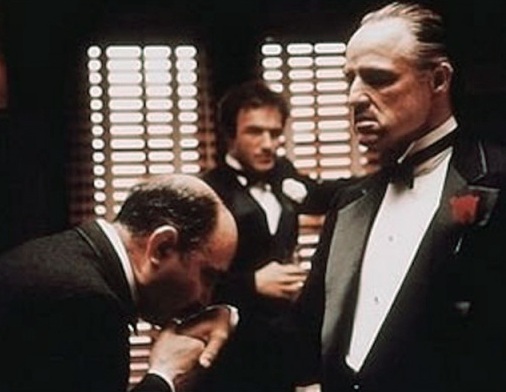
I’ve been so deeply disappointed in watching famous preachers and worship leaders kissing the ring of this antichrist administration.
The Pentagon worship services established by Pete Hegseth are not in keeping with the founding and the character of the United States of America, and the preachers and worship leaders supporting them have abandoned any pretense of serving the church universal, and have taken sides with the empire that stands opposed to righteousness.
Last summer, Defense Secretary Pete Hegseth implemented monthly worship services at the Pentagon.

I’ll start by saying that I find this deeply troubling. While I am a follower of Jesus, I also see great value in the Constitution’s insistence that the federal government avoid any kind of religious coercion. Maybe it’s not being taught very well these days, but I grew up in the immediacy of the Bicentennial celebration of America’s freedom. As a young boy I played the part of George Washington in a school play that was televised on our local PBS channel; as school children we had the importance of Constitutional religious protections drilled into our brains on a regular basis. And we were taught exactly why the First Amendment was so critical: more than just protecting the freedom of speech, it also forbade the government from forcing any particular form of religion on the citizens.
What is often forgotten about America’s history is that several of the colonies and nine of the first states had state churches or imposed religious practices on their citizens. And in some places, it was just as toxic as in Europe: the Quakers were actively persecuted by the Puritans in Massachusetts. And Maryland was explicitly founded as a refuge for Catholics, against typical Protestant suppression of their faith. It wasn’t until later that the Supreme Court began to impose this First Amendment freedom from government imposition of religion on the states, not just the federal government.
With this in mind, I’m very much opposed to anything that imposes religious beliefs or practices on others, because our nation was founded explicitly to bring about religious freedom, and the Founders understood how important it was to avoid governmental coercion.
Now, a lot of conservatives will argue that this establishment FOR religious freedom means that we were founded AS a Christian nation, because they believe that those who founded America were explicitly Christian.
(You can watch this content in video podcast form at
https://www.youtube.com/watch?v=7I8EcxK6ENM)
Ironically, however, many of those same conservatives and evangelicals, if asked to evaluate the faith of many of those original founders without knowing who they were evaluating, would say that those men did not, in fact, fit an orthodox definition of “Christian.” Many of the Founders were Deists, not explicitly Christian; Deists typically resist a theistic definition of faith central for many Christians who believe in a deeply personal and active God. Some Founders explicitly rejected Jesus as Lord. So I find it interesting, and a little dismaying, that modern evangelicals are willing to overlook the details of American founding and jump to their own definition of Christian, while simultaneously imposing the label of “Christian nation” on America.
At any rate, for most of the last year, the Defense Secretary has been leading explicitly evangelical Christian worship services inside the Pentagon.
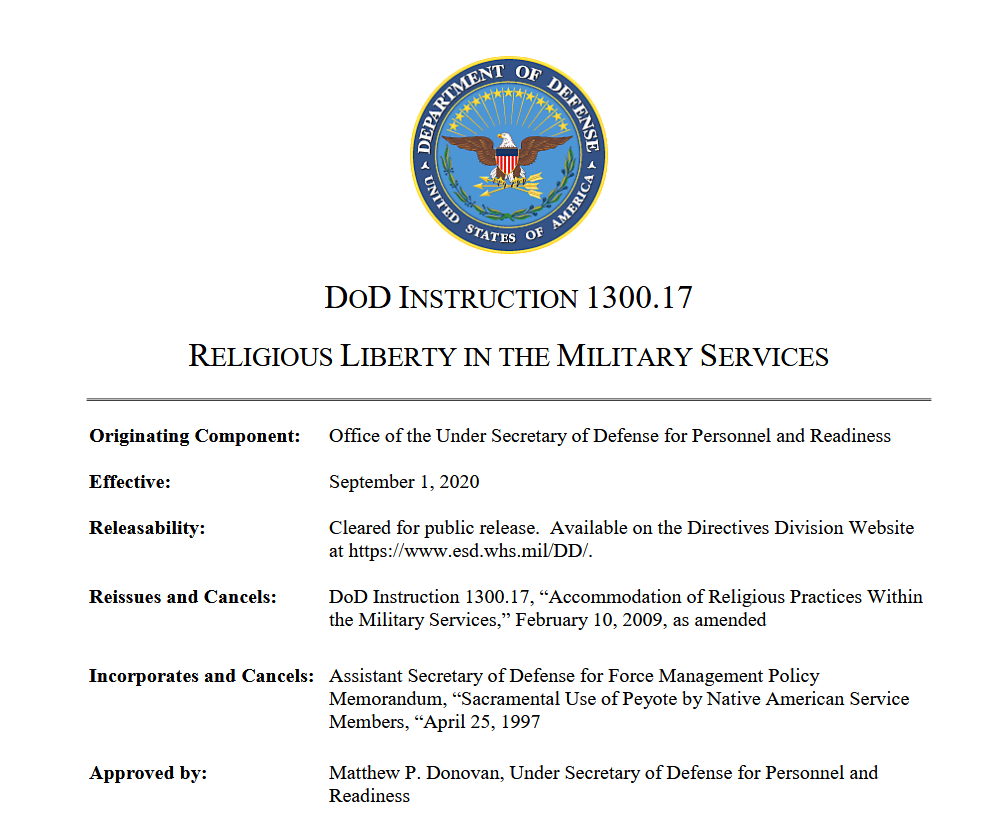
From my perspective, and according to plenty of legal scholars, those services are a violation of the Constitution, in that there is explicit pressure on military officers and civilians by the leader of the entire US military to participate in the practice of a non-ecumenical, hyper-conservative form of Christian worship, led and actively promoted by a Cabinet official, during working hours, in a government facility. It violates the Pentagon’s own policy, which says that a government act is a substantial burden to a service member’s exercise of religion if it “places substantial pressure on a service member to engage in conduct contrary to a sincerely held religious belief.”
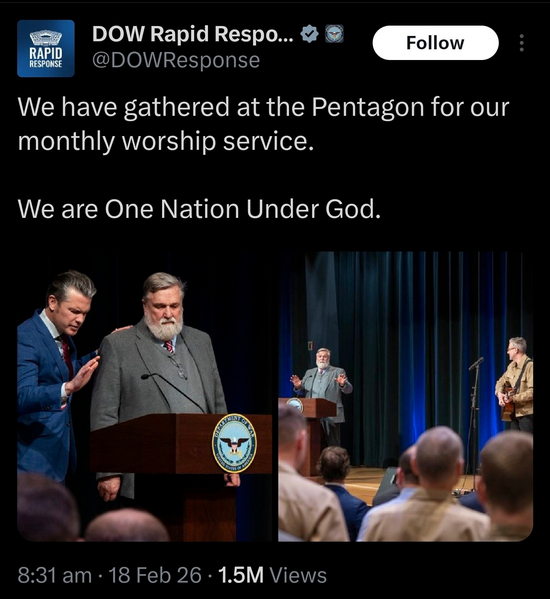
Every single preacher so far at those events has been a Reformed theologian; Reformed theology opposes women in ministry and promotes patriarchy. All those men have promoted deeply conservative political positions. None of them are military Chaplains. The most recent event featured extreme-right controversial preacher Doug Wilson, who advocates for shutting down public Catholic services among other things.
One cannot see what is happening and think that these events are in any way ecumenical or tolerant of all American religious beliefs and denominations, much less all faiths.
In short, they’re quite un-American in their attempt to impose a particular practice of religion on other Americans.
But my concerns run a bit deeper than this. In particular, it has to do with exactly which people are supporting this nationalization of a certain evangelical strand of Christianity.
For the last few years I’ve felt, in some sense, “homeless” with respect to music in general, and worship music in particular.
For literally decades, pretty much the only music I listened to with any regularity was worship and praise music produced by evangelical churches and composers, people like Chris Tomlin, Michael W. Smith, Elevation Church, Bethel Church, Vineyard, Passion, Hillsong, Maverick City… I would listen to hours a week, and never any secular music. But now, all that music feels, I don’t know, “icky” to me.
A big part of the problem for me has been the theology. I now have a number of critical disagreements with the music used in most evangelical churches:
- Warfare. Much of the current worship music is rather violent. As just one example, one of the top worship songs from 2023 by Elevation Worship starts with a verse that says “praise is the waters my enemies drown in” – to which the live audience broke out in cheers – and this focus on victory absolutely pervades worship music today, and unfortunately the “enemies” are often people, especially liberals or non-Christians, not spiritual forces. If someone disagrees with them, it must be demonic and deserves violence. Just look at what’s happened to James Talarico.
- Transactionalism. The idea that if we act or pray or believe correctly then good things must come to us is thoroughly infusing worship theology. I mean, it’s all through evangelicalism – I’d call it an extension of the Prosperity Gospel theology, but even churches that reject explicit Prosperity theology don’t seem to blink at songs that are infused with the same ideas. I call it “vending machine religion” – put in the right quarter, get out the exact candy bar you picked. If anything, it makes God our servant, not our Lord.
- Escapism. The focus on the church getting out of here, being saved from difficulties upon the earth, is deeply rooted in Rapture theology. Since I started to reject Rapture theology, it’s been impossible to miss how much that thinking pervades everything that happens in evangelical churches, and the music is chock full of it. In my song library from my 15 years of leading worship, approximately one in six songs directly mentions heaven. I don’t have anything against heaven per se, but the focus on leaving earth to go to heaven leads to all kinds of theological choices that war against Jesus’ focus on bringing heaven to earth.
- Jesus as lover. Yes, God loves us. Yes, the Bible uses relationship language. Yes, the church is described as the bride of Christ. But a lot of worship music leans hard into a deeply “Jesus is my personal lover” sort of almost-sexualized vibe.
- Me, me, me. It’s deeply personalized and self-centered: instead of what God is building as a community of faith, it’s all about what can God do for us, individually. Even the community and Kingdom thinking is just an extension of “what will I get out of this faith” – I get to go to heaven and live in delight for eternity. I’ve seen it called “Meology” instead of “theology” and “narcigesis” instead of “exigesis.” Jesus is MY friend. God will give ME good things. God loves ME, more than US, far more than THE WHOLE WORLD. All those verses are about ME. Self sacrifice? Not so much. https://intruthshedelights.com/meology-vs-theology-how-self-focus-has-infiltrated-the-church/
- Anti-world. There’s shockingly little true sense of communal thinking in these worship songs. If it’s there at all, it’s increasingly a protectionist, isolationist “let’s us conservative Christians band together against the world which is out to get us” thinking, that rejects any idea that the world is exactly who Jesus made the focus of the Kingdom. Along with the warfare idea, any communal thinking is about getting people to join the evangelical world, instead of the church going out into all the world as Jesus sent us. And it completely ignores the fact that many of the uses of the word “you” in the Bible would be better translated “y’all” – you plural, not you singular. It even rejects non-conservative Christians as other, as just as bad as the unsaved.
- Crowd dynamics. Don’t get me wrong – I love large-crowd dynamics. Being part of a huge group all doing the same thing or all singing the same song is deeply invigorating. But so much of modern worship practice completely depends on this dynamic. I used to think poorly of a pamphlet my Dad once wrote about the dangers of emotionalist worship, where the focus was on hyping up people’s mental state, which can override their intentional choice to focus on God. He effectively complained it was a kind of attempted hypnosis. I used to say he was wrong, that sometimes we need to be mot ivated externally. But now I see the value in what he was trying to describe; a lot of modern worship dynamics try to manufacture that large-crowd dynamic and sell it as “the Spirit.”
- Feelings. Along with crowd dynamics, a ton of the modern worship dynamics involve trying to get people to feel something. Another of my Dad’s complaints was the way that drums create a physiological response in people that they might mistake for something spiritual. And good golly – those synth pads and swelling strings in today’s slower worship songs, that just pound emotion into the moment with all the subtlety of a sledgehammer. And the language often focuses on our emotional response to God. I can’t count how many times someone said to me “I really felt God’s presence today in worship” as if that was the entire goal.
Can some of these things exist in genuine worship moments? Sure. I think they do. But the things I describe above are so overwhelming and pervasive that now it seems like raw manipulation by the leaders, resulting in anti-communal individualistic self-serving practices that are mistaken for worship.
And as I’ve started to sense this, I’m also beginning to see where it starts: money. A worship industry. It’s been called the “evangelical industrial complex” for good reason. There’s a ton of money to be made marketing this form of musical content and calling it “worship.”
I didn’t always feel this way. I recognized for a long time how much commerce was happening, but I was willing to forgive it for the sake of making such music widely available to so many believers, and producing what I saw as life-changing content that spread the love of Jesus around the world.
Given that I was so deeply steeped in the evangelical worship culture for literally decades, and led a worship team for 15 years and played keyboard on teams for another 25 years, I used to have a ton of respect for some of the bigger names in contemporary worship music. Michael W. Smith was absolutely formational for me as a worship leader; his “Worship” albums formed the core of many of the worship sets I planned for our team. Paul Baloche’s worship leader DVD series overhauled my concepts of how to lead a worship team. Chris Tomlin and Matt Redman’s music filled my mouth many Sunday mornings. It seemed to bring so much value to my life.
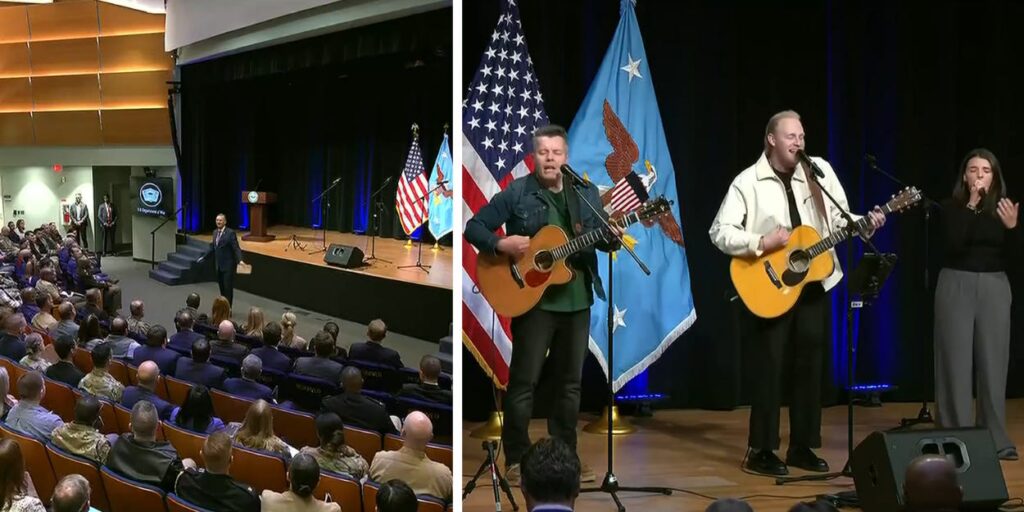
But now I’m seeing some of these same men leading worship inside the Pentagon, and it’s supremely disappointing to see them supporting this administration, this empire, and its blatant disrespect for liberal democracy which provides the foundational liberties they enjoy, and its disrespect for the works of Jesus outside their evangelical enclave. I just can’t accept how much of the Evangelical Industrial Complex is bending the knee to empire, and as a result, what little respect for them remained after my deconstruction has rapidly evaporated.
It’s particularly hard for me, I think, because just five or six years ago I would have rejoiced at what I see happening. I used to be fully bought into the “Seven Mountains Mandate” or Dominionist theology, that we needed to take over the various dominions of our culture for Jesus. And I suppose I still might have found this Pentagon worship easier to accept if it had happened under a less antichrist administration. But I cannot understand, looking at the situation today, how these worship leaders can believe that what’s happening is truly Godly. And even if they believe it’s Godly, I cannot understand how they miss the simple fact that they’re supporting something that deeply offends a fairly large fraction of American Christians.
And so taken as a whole, I see the support of blatant Christian nationalism, the divisive nature of this administration, plus the coercive nature of these Pentagon events as inherently disqualifying. Not of them as Christians, but of them as trustworthy leaders of the church. There’s no reason for any of these big-name worship leaders to accept an invitation like this unless they agree that what is happening in the Pentagon is appropriate.
When I raised these concerns to my peer group, someone replied that maybe these worship leaders are just hoping to bring truth to the situation; they might not agree with the administration and so they’re just trying to present righteousness in the midst of a bad situation. No, I don’t accept that. None of them have said a word against what’s happening, especially not at these hard-right Pentagon events. Nobody is speaking truth to power. Another response was that they knew SOMEONE needed to lead worship, so why not them? No, there are tens of thousands of other potential worship leaders; the role would not go unfilled. I cannot conceive of any way in which their participation was not straightforward support of what’s happening at the Pentagon, and the theology behind it.
My conclusion is that these men, these famous worship leaders, are no longer representing the Jesus I was taught. In fact, I will go so far as to clearly state that I believe that they are now leading worship to a false God, because it sure isn’t the Jesus and the God that I know.
I’ll go even further: they’re “kissing the ring.” They’re submitting themselves to a human empire, in a performative way that endears them to a certain audience, but at the cost of their witness to a closely watching world.
I don’t question their sincerity or their salvation. I no longer believe God is all that concerned about the specifics of our belief system; I actually think God is far more interested in our individual fidelity to whatever we’ve been able to learn about God, even if it’s factually wrong. (I could reach no other conclusion when I consider how many believers over the last 2,000 years held a sharply different understanding of theology than anyone alive today, and I have no doubt God accepted their worship just like mine.) No, the God I see in the Bible spends a lot more time challenging nations and systems than individuals, and God is determined to (a) win every human soul, and (b) overthrow every human system. And so while I trust that I will share a Kingdom eternity with these mistaken men, I also believe it’s my duty to oppose them here in this time and space, because they’re causing deep harm that will have very long-term, very negative consequences.
God is determined to (a) win every human soul, and (b) overthrow every human system.
Lest I be misunderstood, I should point out that I do yearn for righteous worship at the highest levels of our nation. “Blessed is the nation whose God is the Lord” is a true statement. But I don’t believe that worship can ever be sincere if it is coerced, and what’s happening now is coercion and it’s performative, and it does not reflect in any way the heart of our nation. I have no doubt that God would look at it and say “I never knew you” – as Jesus did in Matthew 7:21-23:
21 Not everyone who says to me, ‘Lord, Lord,’ will enter the kingdom of heaven, but only the one who does the will of my Father in heaven. 22 On that day many will say to me, ‘Lord, Lord, did we not prophesy in your name, and cast out demons in your name, and do many mighty works in your name?’ 23 Then I will declare to them, ‘I never knew you; go away from me, you who behave lawlessly.’
I would hope that my theological belief in universal reconciliation does come through here, if you haven’t read or listened to my previous posts. So perhaps I should clarify that while Jesus in Matthew 7 (as well as in Matthew 25:31-46) uses very strong language to reject certain people, I don’t see this as an everlasting rejection, because (as I argue in previous discussions of soteriology and eschatology, such as the previous episode titled “Why Many Evangelicals Misunderstand Universal Reconciliation“), I believe that Revelation 21 makes it clear that God will never shut the gates of heaven against those who eventually, even after death, repent and change.
But despite this universalist conviction on my part, I cannot walk in harmony with those who seem to violate these very clear commands on Jesus’ part about how we are to treat one another, and especially how we treat the vulnerable. And so, it’s my strong sense that anyone choosing to stand with this administration, and enter into the halls of the Pentagon and add their voices to the administration’s evil, will find themselves on the wrong end of Jesus’ judgement in the end, and will suffer the painful consequences.
So to them I say, stop kissing the ring.
And to us I say, stop supporting those who do kiss the ring.
And to myself I say, I give myself permission to feel no remaining loyalty to these men and women, these leaders, who I once cherished and honored as an example to the church. I must release myself from any remaining hold they have on me.
Once again, I find that I’ve said some hard things, but that feels like the season we’re in today. I hope it’s been useful to you.
Be blessed, and we’ll talk again soon.
 and
and  or join our email notification list.