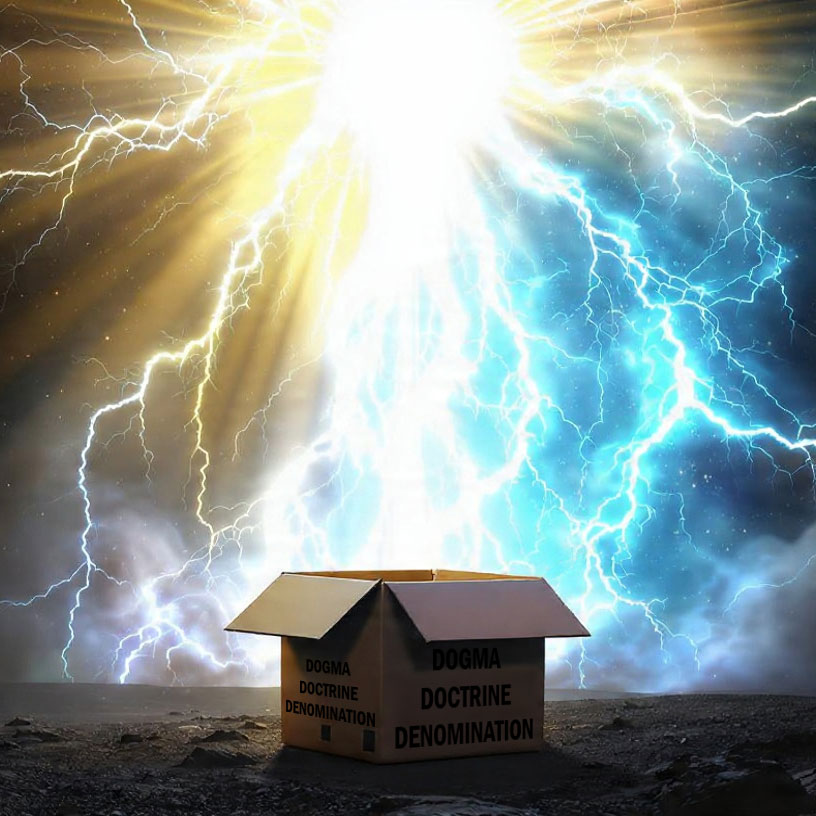
Your brain is lying to you about God – and the consequences are devastating. In this episode, I explore the deeply human psychological habit of “tokenizing” – reducing complex realities to simple mental shortcuts – and reveals how we inevitably do this with God, collapsing the infinite Divine into a neat little package of doctrine, denomination, and politics that fits comfortably in our minds. But that comfort comes at a terrible cost: it locks us into a distorted, shrunken picture of God, turns us against anyone whose “tokens” differ from ours, and has even been used to justify violence, oppression, and the idolization of political figures. Drawing on Scripture, psychology, and his own journey of deconstruction, I’ll make a case that God has always resisted being boxed in – and invites us to the terrifying, exhilarating freedom of encountering a God too wild and vast to be contained by any label.
I. INTRODUCTION
Think about the last time you walked into an unfamiliar restaurant or bar. I imagine, if you’re like me, that you immediately looked around the room, and started to try to get a sense for who was in there with you. Were they old or young? Mostly your gender, or others? Dressed professionally or laid back? Mostly your race or some others?
I’ve had plenty of experiences like that. Some of the more memorable were the first time my wife and I walked into a foreign grocery store in the Caribbean, or when we walked into a Scottish pub as a young American couple, or my first meeting as a new employee of a new company, and everything was deeply unfamiliar, and I needed a quick read on who I was dealing with.
This makes a lot of sense, really. It’s something of a survival tactic – maybe not true survival today, but in the distant past, in my lizard brain, it’s kind of baked into the process of encountering the unfamiliar. Am I on home turf, or someone else’s turf? Is my attire going to get me unwanted attention? Am I the only person like me? Is the place frequented by people that might consider me a threat, and thus present a danger to me?
It’s probably not surprising that we do this same thing in religious contexts. This brings to mind the last time I visited a new church. I knew it was a house of Christian faith, but other than that, everything was unfamiliar, and I needed a quick read on how I should be acting, who I was dealing with, and how they might respond to me.
One of the psychological tricks our mind plays – it’s a baked-in feature of the human brain – is lumping things into categories. In the presence of a lot of data, the brain optimizes its processing by categorizing things, and assigning lots of different objects to as few groupings as possible. This lets the brain handle that high volume of new data more efficiently.
Let’s call that process “tokenizing.” It’s to assign a token of identity or characteristic to a thing, so we can refer to that thing with just the simple token. In those new situations, it’s one way to survive that flood of new data. In particular, assigning new things to familiar tokens helps us manage the moment.
I discovered how this worked in my own my brain some years ago, while reviewing some family vacation photos my dad had taken when I was eight or ten years old, and I was quite struck by how wrong my younger siblings looked to me. I remembered the environment of those photos quite clearly – but my siblings in the photo looked far, far younger than in my memories.
As I thought about it, I realized what was going on: my brain had decided, somewhere in the intervening 40 years, to replace the memory of my siblings with a token for them. Rather than store each individual aspect of their appearance, my brain really only needed to remember “this is my brother” or “this is my sister” in those memories. So when I thought about those events these days, my current brain was inserting the “brother token” or “sister token” into the mental picture I formed – but it was inserting the way my siblings looked today. My brain’s desire for efficiency and data compression overrode the accuracy of the memory.
I’d submit for our consideration that we do exactly the same thing with our thoughts about God. And I’ll develop in this discussion the risks that this carries: that our tokenizing God in this way actively distorts our view of God, and leads to real consequences in how we treat our fellow humans.
II. THE PSYCHOLOGY OF CATEGORIZATION
As I said, our brain has several survival optimizations built in. Data compression allows us to hold vastly rich and wide and deep memories, far more than the sheer number of neurons might explain. For example, if I’m remembering a dozen trips to the same building, I don’t need to remember the entire building in each memory; I just need to remember “my office” or “my house” or “my church” in each event, and then hold only one fairly detailed memory of the office itself. So this tokenizing is a biological form of data compression.
And tokenizing also allows processing a lot of information very quickly, since for quite a few things we only need to deal with these simple tokens or placeholders. Once I’ve assigned some attributes or characteristics to that token, I can make decisions about the token without having to recall each bit of information each time.
In our human relationships, there’s also an aspect of self-preservation at play here. It becomes much easier to deal with all the individual humans we encounter, if we use some tokenization scheme. This person I am meeting today is Black, female, tall, Democrat, cisgender, heterosexual. In six tokens, I have identified hundreds if not thousands of character traits and physical features and thought processes associated with that person. It’s ludicrously efficient.
And it’s also dangerously fraught with the possibility of critical errors.
For one thing, the nuances get flattened. For example, in my “Democrat” token for that person, I’m probably making a lot of assumptions about them that may not be subtle enough – are they centrist or leftist? Would they be more in favor of a Biden or a Harris presidency? Or in the “female” and “heterosexual” and “cisgender” tokens, I am making a lot of assumptions about how they internally think about their gender identity that, at best, are probably not nuanced enough at, or at worst are flat out wrong. Most such errors are minor, but in all to many cases, they can divide us and hinder if not completely prevent useful conversation and comprehension.
For another thing, our desire for categorization tends to lead us to gather and associate with those who we’ve tokenized like ourselves. Republicans will seek out others who use the same label, and avoid close contact with those who use the Democrat or Independent label. Heterosexuals will usually avoid those who use the gay or LGBTQ label. All too often, white people will at least unconsciously avoid those of other races in their social situations.
It also prevents useful cooperation with others. For decades, as one who had accepted the “Republican” and “Conservative” and “Evangelical” tokens, I avoided those individuals whose tokens were typically at odds with mine. I clearly remember the shock and dissonance of suddenly discovering a favorite college professor was a Democrat – and feeling like suddenly I wasn’t allowed to trust him any more. I see the same today when people apply that “woke” label to others, and suddenly nothing they say can be trusted.
The sheer act of lumping people into such reductionist categories flattens our view of the world, and stops us from thinking deeply about what we see around us. It distorts the truth of what’s happening, in our limited comprehension. It leads us to internal comfort about what we’re seeing, that may nonetheless be an outright lie in our minds. It may be a useful social lubricant, allowing us to claim some commonality with others, but perversely it prevents us from perceiving the rich diversity of those in our sphere of acquaintance and influence.
I believe that everything I’m describing here is a fairly universal human way of handling the world around us.
And this same characteristic becomes a central part of how we manage our relationship with the divine.
III. HOW WE TOKENIZE GOD
There are a number of ways that we tokenize God. Just like with storing memories or facilitating rapid identification of things, it’s a useful optimization for the finite human brain, most especially when we’re considering the infinite. Sometimes, the only way to deal with such a vast concept is to distill it down greatly.
One easy token to identify, or really, a set of tokens: our doctrine. We love labels, don’t we? We’re Calvinist, or we’re Armenian. We believe in baptism by complete immersion or by sprinkling the head. We do or don’t believe in infant baptism. We believe that the indwelling of the Holy Spirit is demonstrated by speaking in tongues, or instead that it’s the sign of demon possession. We believe in eternal torment or the universal salvation of all humans. We believe in the inerrancy of scripture, or we reject it. We even disagree about how many books of the Bible are in the canon of scripture. In other words, we collect a series of tokens that we can stack neatly on our mental bookshelf as the package of our theology. With this many conflicting tokens, however, it’s easy to see why there are literally tens of thousands of unique denominations, all holding some specific set of these beliefs, these tokens, as The Truth.
So that leads to another, very obvious token: our denomination. If we’re faithful to a particular denomination, then at some point we likely decided that our denomination’s ideas about God are the correct ones. All those doctrinal tokens can often be collapsed into just one meta-token, one label, for our denomination. So rather than spending a lot of mental energy tracking the finer points of theology, we just say “I’m a Methodist” or “I’m a Baptist” or “I’m a Catholic,” and we trust that those labels convey the broad sweep of our theology to the listener. I used to attend a church that didn’t really want to be identified with any given denomination, and I used to have to spend a lot of words describing our general set of beliefs. A single denominational token would have been so useful to me.
I suspect we also do this theological tokenization with our politics, actually. At any given point in a nation’s history, the adherents to a given political party tend to be somewhat aligned with their theology too. So in some sense, we tokenize God by our political affiliation. If you’re a conservative, you probably share a number of assumptions about God with other conservatives, and you probably shun a number of assumptions about God that liberals believe. And vice versa.
Perhaps we also do this in our sense of how God responds to humans. A few years ago I realized that many Christians see God as a sort of cosmic vending machine. If we put in the right coins – the way we pray, the things we pray for, the gifts we give to God – then we get out the things we want. Prosperity Gospel is a natural end state of this kind of belief about God: if you’re not prospering, there’s something wrong with how you approach God. In their view, God prospers us to bring glory to God’s reputation in the world. But in some sense, the Prosperity idea is that we can manipulate God into giving us our desires, because – not at all coincidentally – we want prosperity and health, just like that view says that God wants for us. On the other hand, many Christians emphatically reject this idea about God’s response to humans. They believe that God comes to sit with us in our pain, and that the process of suffering produces righteousness, and that God isn’t interested in making us wealthy or popular or healthy just to show off God’s glory. Rather, God is glorified by how we exhibit the fruits of the Spirit in the midst of our struggles. So we tokenize our ideas about how God responds to us by sitting in one of these two camps.
Our approach to nationalistic thinking is another way we often tokenize God. One might believe that God is interested in the future of nations, of political entities, as the large-scale tools that God uses to bring about a specific eschatology, a specific eternal future. Conversely, one might believe that God is uninterested in the specifics of human politics, as the Kingdom of Heaven is the only relevant eschatology at play. So identifying with a particular nation/state system, and just how much emphasis we believe God places on that system, is a useful token we use to communicate and to understand something important about God.
But here’s the irony about all these tokens: By clutching them tightly, we’re actually defining God to a very specific degree in our own minds – which blocks us from encountering a God – or aspects of God – that may not fit so neatly into our particular box. There are more than a few stories in the Bible of times where God appeared and shattered their preconceptions. Abraham encountering a burning bush. Peter and the vision of the sheet with unclean food animals. And perhaps the best example: the Messiah appearing after centuries of prophecy, but having no interest in conquering the Roman government, and frequently confounding their religious expectations by saying “you have heard it said, but I say to you.”
Over the history of scripture, we actually see quite a significant variation in how God was presented, how God was encountered. Any attempt to look at the entirety of a very complex Bible and say “this is exactly who God is” will necessarily include a lot of choices to ignore certain presentations of God, while centering others. In truth, God’s nature and character cannot be pinned down so easily. I think, rather, that the Bible presents a trajectory of understanding, of humans encountering the Divine, of having insufficient tokens or labels to understand God, and recording their own imperfect stories. And it’s quite reasonable, I think, to expect that trajectory to continue. We humans will never be able to fully define the Divine, and any attempt to tokenize God to our own comfort level must fail to be truly accurate.
IV. SCRIPTURE’S OWN RESISTANCE TO TOKENIZATION
And I think if we’re fair in our reading of the Scriptures, we’ll see that God also resisted such tokenization. Start off with one of the very first personal encounters with God that’s recorded in the Bible – God defines themselves as “I AM” – as the essential purity of raw being, of pure existence. Not “I am love” or “I am justice”, even though God does seem to claim those attributes later, but in this case, simply “I AM.” God says “I exist.” In a sense, that pure existence subsumes all possible categories.
During Israel’s complex history, the prophets often resisted the people’s attempts to domesticate God. Consider Isaiah 1:11-15, Amos 5:21–24, and Micah 6:6-8 where the prophets portray God as absolutely hating and rejecting the performance of religious rituals that God had specifically assigned, because the heart behind their performance was filthy. God invited the people to reason together with God – to engage with God rather than simply and blindly following a script.
And Jesus seemed to follow this trend as well. Whatever box His disciples and His religious peers seemed to try to put Him in, Jesus simply shrugged them off and refused such simplistic categorization. In response to Nicodemus’ confusion about the idea of being born again, in John 3:8 Jesus says “The wind blows wherever it pleases. You hear its sound, but you cannot tell where it comes from or where it is going. So it is with everyone born of the Spirit.” His answers to His challengers often deflected their attempts to pin him down, in response asking deep questions which revealed their fundamental misunderstandings and assumptions of the true meaning of the Scriptures.
And much of the prophetic and apocalyptic writing in the Bible – especially Revelation – is loaded with wild, obtuse, almost untamable imagery that for a couple thousand years has refused to be neatly categorized; different groups have tokenized these ideas for their own convenience, but for all the millions of human minds wrestling with those writings, no consensus has emerged. One might readily wonder if God intended those writings to resist tokenization.
Fascinatingly, Jesus shared one thing with His closest followers that seems to shake the certainty that the Bible itself contains everything we need to understand about God – that after He left, God would send them the Holy Spirit to teach them all things. If the Bible were truly the summation of all things about God, that would be a strange thing to say. Even those who insist on “sola Scriptura” will simultaneously assert that the choices made by the early church of which doctrines to centralize and which writings to include in the Canon were inspired by the Holy Spirit – a process that took place well outside the bounds of the Bible itself, and hundreds of years later. Claiming “sola Scriptura” is actually saying “sola Scriptura plus some human choices” or perhaps “sola Scriptura plus the Holy Spirit centuries later.”
All of this leads me to conclude that God is unwilling to be pinned into a neat little box, to be tokenized like we would want.
V. THE CONSEQUENCES OF TOKENIZING GOD
The problem with putting God into a neat little box is that it constrains us, not God. Whether we realize it or not, we lock our understanding into that box, and typically we refuse to let that dogma be confronted or challenged. It’s understandable; our comfort depends on some level of certainty about our world, and in particular, our future. If we constantly live in doubt of our theology, it can be horribly unsettling. Who is God? What does God expect of me? What can I trust God to do in my life? When I’ve locked down my theology, when I’ve reduced God to a specific set of tokens, I don’t have to worry about those things any longer. I’m willing to trade away the uncertainty-laden benefits of spiritual growth for the comfort of certainty.
Along with that constraint, when we reduce God to a neat set of ideas, we lose genuine mystery, wonder, and encounter with an infinite God that is impossible to define and package. Back when I was certain about my theology, I knew exactly what God was; the only wonder and excitement available to me were when God happened to act in a bigger way within the exact same box: healing more people at once, or saving more people at once, or having more people gathered singing the same songs with more excitement. But when God did something that broke outside my expectations, it wasn’t wonderful; it was deeply unsettling and required extensive soul-searching to figure out if God could also be that thing that I’d previously rejected. In other words, this tokenization robbed me of a walk with an uncontainable, wonderous God.
But the consequences of tokenizing are much bigger and more harmful than even that.
When I’ve tokenized God, I’ve also decided that those who have a different version of God – who have tokenized God differently than me – are Wrong. Some people are fine with others viewing God differently. But many people see existential risk in others’ incorrect ideas about God. In their mind, it threatens the stability of their own lives. Witness the uproar among conservatives about the 2026 New York City election of a Muslim mayor, Zohran Mamdani. Some 15% of evangelical conservatives resisted voting for Mitt Romney, a Mormon, during his 2012 presidential campaign. And people even tend to react against fellow believers with substantially different ideas about God – consider the ongoing angst between charismatics and fundamentalists, which has persisted for many decades now. Perhaps the biggest example today is the conservative Christian fight against Islam, which has been used to justify all kinds of hatred against humans living in Gaza and Palestine and Lebanon and now Iran.
The result of this tokenizing then spills quite naturally into actual violence and harm. Conservatives are cheering the slaughter of many thousands across the Middle East. Within our own borders, they’re happy to see immigrants rounded up and sent to inhumane and even deadly prisons and deported back to nations that are certain to put them to death.
Even without such raw violence, this tokenization of God is spilling over into the MAGA movement, where a very specific picture of God and God’s word has resulted in the idolization of one man, going so far as to directly compare him to Jesus, if not to see him as the actual modern manifestation of Jesus. The words “second coming” have appeared more than a few times associated with this one man in recent months.
Jesus, along with those who wrote much of the New Testament, consistently rejected this kind of tribalism and othering of fellow humans. The New Testament presents a vision of a glorious Kingdom of God coming upon the earth – not some eternity in heaven, but actually upon earth. And it wasn’t a future kingdom, only in eternity: Jesus inaugurated it a full 2,000 years ago and made it available to us today. In Luke 17:21 He said “today the Kingdom of God has come upon you.” But when one tokenizes God, and reduces divinity to our particular package of beliefs, that implies that this Kingdom could only manifest in some imagined future, and only if every person who has a different set of tokens has either passed away or been converted to one “perfect” theology. So it’s inherently exclusionary, and insists that only THIS or THAT theology is acceptable to God. And to me, that is completely at odds with what Jesus was teaching.
VI. RECOVERING A WILDER GOD
So if we cannot insist that only our particular theology, our tokenization of God, is The Truth, what then? What does it look like to hold God without controlling God?
There’s this concept called apophatic theology. Essentially, it means to know God by what God is not. It’s the opposite of cataphatic theology, describing God by saying what God is.
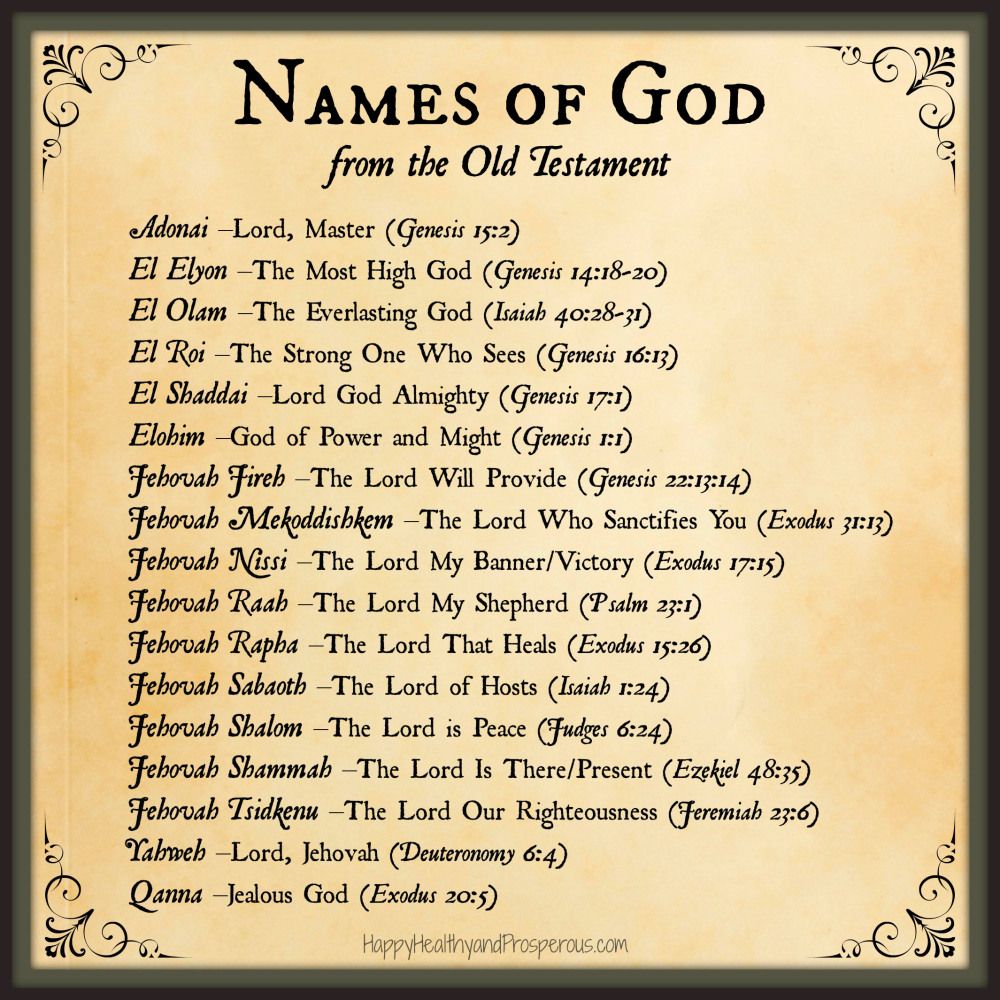
Most Christians grow up with very strong ideas about what God is. Most of us have probably seen a poster showing “the names of God” – El Shaddai, Jehovah Shalom, Good Shepherd, Chief Cornerstone, Immanuel, and so forth.
In my former years, I used to discuss theology for hours with an agnostic friend, and I distinctly remember saying to him some variation of “God is X, therefore Y.” I was arguing from a point of absolute certainty in my mind about what defines “god” – how that particular English word had certain connotations in my mind. But I never realized that I was worshiping a god of my own making, based on a set of definitions – names of God – or in the context of this discussion, tokens – that I had either inherited from others who raised me in the faith, or which I’d seen in the Bible, or even that I had absorbed from popular culture. But with a little more wisdom of age under my belt, I’ve come to realize that this particular set of tokens I clung to were contextual. If I were to discuss theology with someone from a very different culture, we’d be at odds over what defined “god.” My definitions would not serve the discussion.
And so part of the last six or so years of my life has been intentionally and carefully laying down those tokens. Even tokens that were quite valuable to me, for my entire life, had to be evaluated carefully, and in many cases disposed of. Many people would call that process “deconstruction.” Many times, the conclusion I reached was that I could never know for certain if a given label or token or idea about God was actually true; it was based on a certain specific interpretive choice of certain select Bible verses, when other valid readings were in fact possible, and often contradicted by other verses. I’d been given a very specific token to hold, but it was actually a limit on what God could be. And in fact, as I started to lay those tokens down, I discovered a God that was much bigger, much more complex, much richer than I had imagined.
And one of the hardest parts about that process was the dawning realization that I needed to sit with uncertainty as a spiritual discipline: I could never fully know God. I couldn’t put God into a box of my own making, for my own comfort. God was just too big for that to ever be valid. In many cases, God became to me far more fluid than I imagined: in one moment, the God that was walking with me and speaking to me was quite unlike the God that was with me in another moment. Not in an opposite sense, like good versus evil, but rather as a shockingly different revelation of Love than I had previously encountered. God was, to paraphrase 1 Corinthians 9:22, “all things to all people, that God might by all means save them.” Trying to define what God WAS, that cataphatic approach to understanding God, was never going to work. I needed to recognize what God was NOT: Tokenized. Limited. Constrained. Boxed In. To quote C.S. Lewis, “Aslan is not a tame lion.“
VII. CONCLUSION
I started by describing our human need, and self-protective tactic, of quickly analyzing complex information by sorting it into neat categories, into tokens. That process isn’t inherently wrong or evil, and those tokens are not inherently wrong or evil. They’re often quite useful.
But we have to truly hold those tokens VERY loosely. If we’re to appropriately worship God, it’s going to be a much bigger and more complex God than we might be comfortable with.
So can we resist the need to keep things simple? Can we tell God that we’re okay with complexity? With mystery? With maybe never knowing with absolute confidence anything about God, maybe other than God’s one most all-important self-definition as Love, as Love personified? Let God show up. No, more than that: tell God that you’re okay with God showing up in whatever way God chooses. Give God your unconstrained, absolute “yes” to upend your theology. To show you where your tokens are too limiting. To show you a much bigger picture than you’re currently comfortable with.
Let me close with a question rather than an answer: what’s one thing the Spirit has already revealed to you about God’s nature, that you’ve been scared to accept because it might require you to change?
I’ve found that sitting with such questions has been life-changing.
Thanks for spending some time with me today. I really value each and every follower, and I hope you’ll take a moment to leave a comment or drop a like or to share this with someone who needs it.
Be blessed, and we’ll talk again soon.
 and
and  or join our email notification list.